
New to the Condo Board? The 5 Fire Code Compliance Items That Could Expose You Personally in 2026

Significant amendments to the Ontario Fire Code took effect on January 1, 2026, including changes affecting carbon monoxide alarms, fire-alarm standards, certain integrated life-safety systems, smoke-control testing, and records. Boards should not assume that retaining a contractor transfers the corporation's Fire Code responsibilities. Understanding which requirements apply to the building is an important first step toward protecting the corporation and supporting informed board decisions.
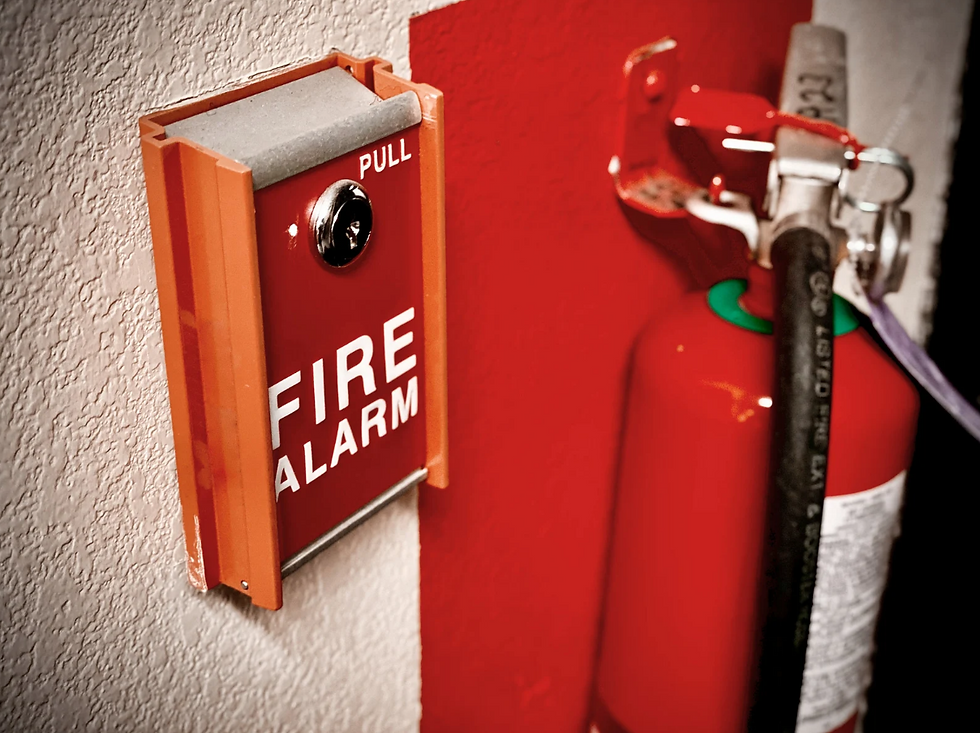
In City Site’s podcast “Ontario Fire Code Changes Condo Boards Need To Know in 2026” with Sam Soltani of The Trace Group, we discuss exactly the personal responsibilities directors carry under the 2026 Ontario Fire Code, alongside other fire safety, documentation, and practical board readiness. The conversation is especially useful for directors who are still learning how fire safety responsibilities are shared between the corporation, the board, and its contractors.
It shows why informed questions and reliable records are essential parts of responsible governance. Check out more information about this podcast here: #WeSpeakCondo podcast
The Ontario Fire Code is enforced under the Fire Protection and Prevention Act. On conviction, the maximum fine for a first offence is generally $50,000 for an individual and $500,000 for a corporation. The Act also contains specific liability provisions for corporate directors and officers, including where they know the corporation is violating or has violated the Fire Code. Following the November 27, 2025 Thorncliffe Park fire, Toronto Fire Services announced Fire Code charges in March 2026 against PFC Construction Inc., Metropolitan Toronto Condominium Corporation 956, and Del Property Management Inc.; those charges were allegations and had not been adjudicated when announced. Since January 1, 2026, municipalities may also choose to establish an administrative monetary penalty program for prescribed Fire Code contraventions. Sitting on a condo board therefore carries real governance responsibilities, but personal liability depends on the applicable law and facts.
Carbon Monoxide Detection in Hallways
Where a forced-air fuel-burning appliance outside a residential or care suite directly heats a public corridor serving residential suites, the amended Fire Code requires carbon monoxide alarms in that corridor. In an undivided corridor, required alarms must be spaced not more than 25 metres apart. The 2026 amendments also expand CO-alarm requirements in other specified residential and care-occupancy locations. Boards should confirm with a qualified fire-safety professional whether these provisions apply to their building and whether required alarms are installed, tested, and recorded.
Fire Alarm Testing Under CAN/ULC-S536 and S537
The annual fire-alarm inspection continues, but Ontario now references CAN/ULC-S536-2019 for inspection and testing of fire alarm systems. CAN/ULC-S537-2019 is a separate standard for verification of fire alarm systems when verification is required. Required Fire Code tests and corrective measures must be documented. Boards should ask their qualified fire-alarm service provider to confirm the report format and battery-testing procedures required by the current incorporated standard.
Integrated Systems Testing Under CAN/ULC-S1001
Ontario's 2026 Fire Code amendments added ongoing testing and maintenance requirements for certain integrated fire-protection and life-safety systems. The new provision applies to integrated systems installed on or after January 1, 2020 that were required by the Building Code to be verified to CAN/ULC-S1001. It is not a blanket retroactive requirement for every existing condominium. Alterations to fire-alarm, sprinkler, door-release, or security interfaces may trigger verification or integrated-system requirements depending on the scope of the work, so boards should confirm applicability with the project professional before tendering.
Smoke Control Procedures and Seasonal Testing
Smoke-control inspection and testing requirements depend on the system's design basis. For systems designed to Building Code requirements, testing is performed under procedures established by the system designer. If those procedures are unavailable, the system must be assessed and written periodic procedures established and signed and sealed by a Professional Engineer or Architect, unless another procedure is approved. Boards should confirm the building-specific procedure and testing schedule.
Records and the Annual Fire Safety Plan Review
The Fire Code now expressly permits electronic records where they can readily be made available to the Chief Fire Official on request. Fire safety plans to which Section 2.8 applies must be reviewed at least every 12 months and revised as necessary. The Code does not impose a province-wide annual resubmission or renewal process, so boards should follow any applicable local approval process for new or revised plans. Required fire-alarm, corrective-action, and smoke-control records should be kept readily available in an organized location.
Acting on Advice Is the Board's Strongest Protection

These changes are intended to strengthen fire-safety compliance and documentation. Prompt communication, accurate records, corrective action, and appropriate professional advice are prudent governance practices. Under the Condominium Act, directors must act honestly and in good faith and exercise the care, diligence, and skill that a reasonably prudent person would exercise in comparable circumstances.
Obtaining and relying in good faith on appropriate professional advice can be relevant to that standard of care. D&O insurance coverage, however, depends on the corporation's actual policy and the circumstances of a claim.
For boards that are unsure where they stand, a structured review can be a practical starting point. Contact City Sites Property Management to discuss your building's needs and request a proposal. A qualified fire-safety professional can then help determine which 2026 Fire Code requirements apply and what corrective work, if any, should be scoped.
For a deeper discussion of the personal responsibilities directors carry under the 2026 Ontario Fire Code, listen to the full #WeSpeakCondo episode with Sam Soltani of The Trace Group. The conversation adds useful perspective on fire safety, documentation, and practical board readiness, and is a helpful companion to this article.
Listen and learn more: YouTube | Spotify | Apple Podcasts | Amazon Music | iHeartRadio


Comments